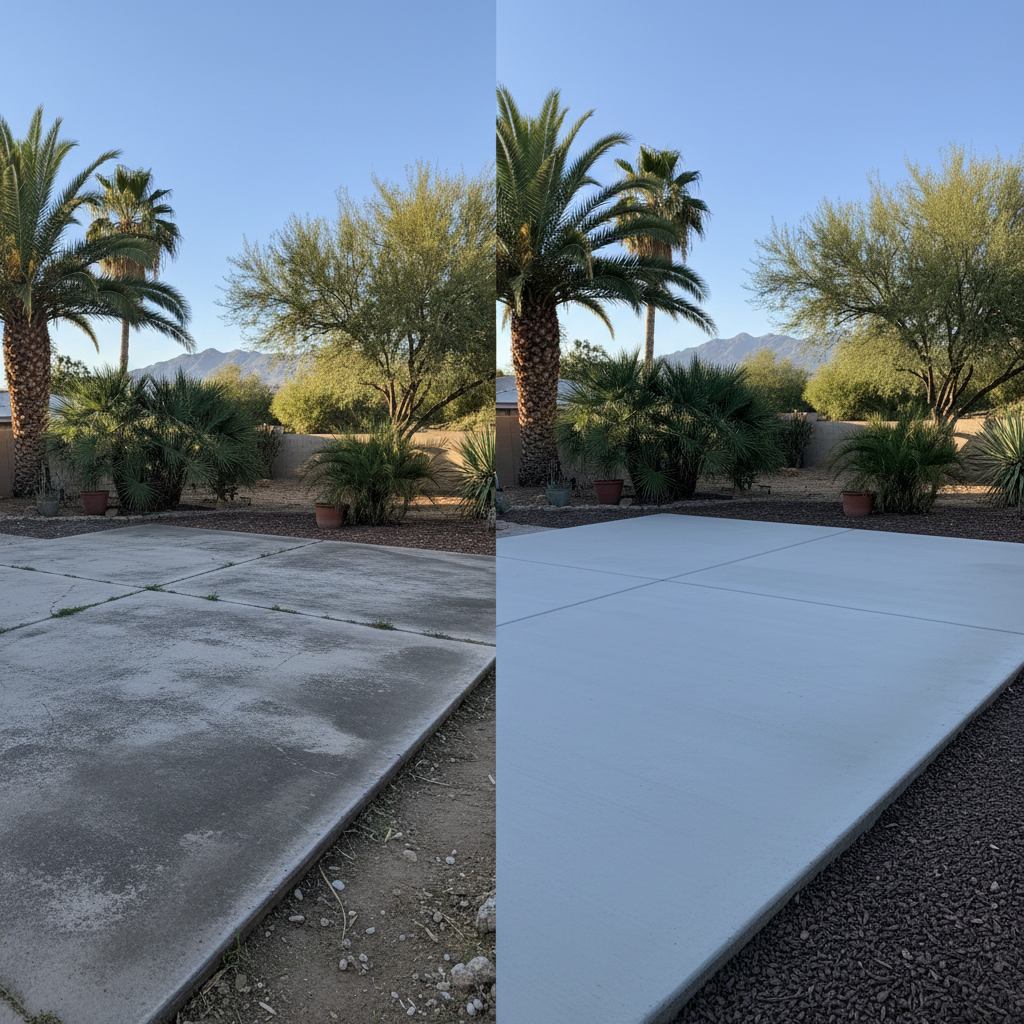
So, you’re thinking about sprucing up your backyard, maybe adding a new patio, or finally getting that driveway done right. That’s awesome. But now you’re probably stuck wondering: should I stick with the classic poured concrete, or are those interlocking pavers actually a better bet? Honestly, it’s a question I hear all the time from folks across Laveen, whether they’re in the older homes near Baseline or those shiny new builds out by the Loop 202. Let’s break down what you really need to know.
The Real Deal on Poured Concrete
When most people picture 'concrete,' they're usually imagining poured concrete. It’s a big part of what we do here at Kingdom Concrete Laveen, and there's a good reason for that. We pour a liquid mix, smooth it out, and then let it cure into one solid slab. Sounds simple enough, right? Well, not always. A lot goes into getting it just right, especially with our desert soils and that intense Laveen heat.
Cost
Generally speaking, poured concrete will be easier on your wallet upfront compared to pavers. You're paying for the material, the crew to mix and pour it, and then the finishing touches. The bigger the area, the more cost-effective it usually becomes per square foot, which is nice. While no two jobs are ever exactly alike, for a basic patio or driveway, you'll typically see a lower initial price tag than if you went with a paver installation.
Durability & Maintenance
A concrete slab, when it’s installed correctly, is incredibly tough. It can easily handle heavy stuff, like your truck or RV, without much fuss. The key phrase there is 'installed correctly,' though. If the ground isn't prepped right, or the mix isn't quite perfect, you could end up with cracks. And once a crack shows up, it's pretty hard to fix it so it disappears completely. Usually, you're looking at patching, which can stand out, or a full replacement if things get really bad. As for keeping it up, maintenance is pretty low. You might want to seal it every few years to keep stains away and make it last longer, and a good power wash now and then will keep it looking sharp.
Appearance
For a long time, poured concrete just meant a plain gray slab. But things have really changed. We can do all sorts of finishes now – a broom finish for good grip, a smooth trowel for a sleek look, exposed aggregate for some texture, and we can even stamp concrete to make it look like stone or brick. So, you actually have more options than you might think to make it look fantastic.
Getting to Know Interlocking Pavers
Pavers are individual pieces, usually made from concrete or sometimes natural stone, that fit together like a puzzle over a prepared base of sand and gravel. You see them a lot in walkways, driveways, and those really decorative patios.
Cost
This is generally where pavers tend to cost more. The material itself is pricier per square foot than ready-mix concrete. Then you've got the labor, which is definitely more involved. Each paver has to be laid one by one, cut to fit around edges, and then the whole thing needs to be compacted and joint sand swept in. So, yeah, expect a higher upfront cost.
Durability & Maintenance
Pavers are surprisingly flexible. Because they're separate pieces, they can shift and settle along with the ground without cracking, unlike a solid slab. If one gets damaged, you can usually just pop it out and replace it. That's a huge plus, especially here in Laveen, where we get a lot of ground movement with our expansive clay soils; pavers handle that better than a rigid slab would. Weeds can become a problem if the joint sand isn't kept up or sealed, and you might need to re-sand those joints every few years. Ants can also be a real nuisance, building nests in the sand between pavers. Power washing is fine, but you need to be careful not to blast out too much joint sand.
Appearance
This is where pavers really shine for many homeowners. You get a massive variety of colors, shapes, and patterns. You can create some truly intricate designs that are pretty tough to pull off with poured concrete. They have this natural, segmented look that a lot of people just prefer for its overall vibe.
My Take: What's Best for Laveen?
Alright, so which one should you actually pick? It really comes down to what matters most to you, but I'll give you my honest opinion based on what I see happening here in Laveen every day.
For pure durability against our shifting desert ground and the ease of fixing things, pavers definitely have an edge. That flexibility means they're less likely to show catastrophic cracking from ground movement or even tree roots. If you're planning a big, heavy-use area like a full driveway, and you want that long-term reliability with super easy spot repairs, pavers are a fantastic choice – assuming your budget allows for that higher initial investment, of course.
However, if you're looking for the most budget-friendly option for a large patio or a basic driveway, and you want a clean, solid surface, a properly installed poured concrete slab is still a winner. With today's sealing techniques and the right mix, it'll hold up beautifully. Just make sure whoever you hire knows how to prep the subgrade correctly and include expansion joints to handle our temperature swings. We always make sure to put in plenty of control joints to help guide any cracking along those lines, making it much less noticeable.
Ultimately, both are solid choices for your Laveen home. Think about your budget, the look you’re going for, and how much you want to deal with potential repairs down the road. If you’re still on the fence, give us a call at Kingdom Concrete Laveen. We can walk you through the options for your specific project and help you make the best decision for your home.