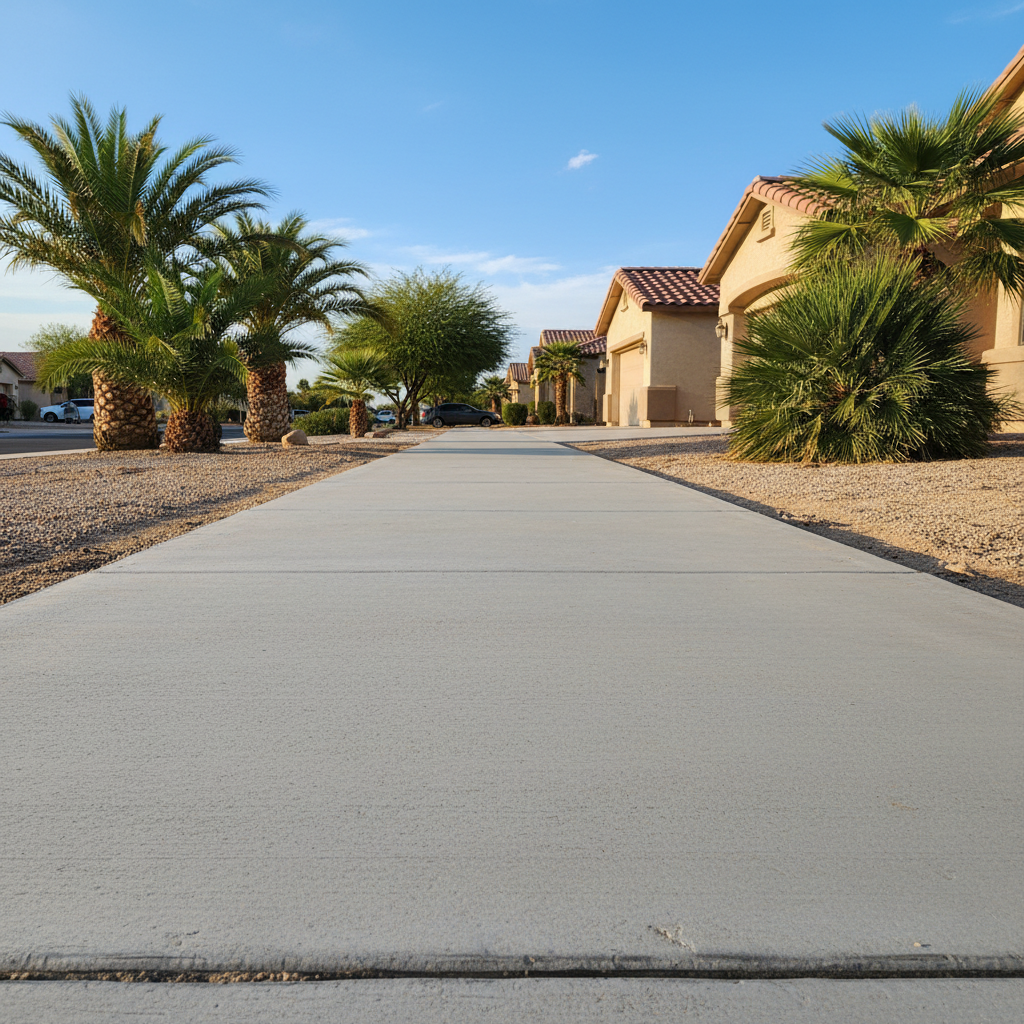
Ever wonder why some concrete sidewalks around Laveen look great for decades, while others crack and crumble after just a few years? It's not usually magic, you know; it's maintenance. Here in Arizona, our concrete faces some pretty tough conditions. And ignoring your sidewalks? That's a surefire way to shorten their life.
Making Your Sidewalk Last in the Desert
The biggest enemy of concrete in Laveen isn't just heavy foot traffic. It's our extreme heat and the constant expansion and contraction that comes with it. Think about it: that 120-degree summer day followed by a 70-degree night puts a lot of stress on the material. Proper installation with good expansion joints helps, sure, but you've got a role to play too.
First off, keep it clean. Dirt, debris, and especially organic matter like leaves or pet waste can hold moisture against the concrete. This leads to staining and even surface deterioration over time. A simple sweep or a good hose-down regularly goes a long way. For tougher stains, a pressure washer can work wonders, but be careful. Don't use too high a setting or hold it too close, as you can damage the surface. I've actually seen folks accidentally etch lines into their concrete doing that.
Sealing is another big one. A good quality penetrating sealer, applied every few years, acts like sunscreen for your concrete. It helps repel water, oil, and other contaminants, making cleaning easier. Plus, it protects against the harsh UV rays that can break down the surface. It also minimizes the impact of our monsoon rains, preventing water from soaking in and causing issues when it evaporates quickly in the sun.
What Does Regular Maintenance Look Like?
For most homeowners, regular maintenance isn't a huge chore. It's mostly about looking around and preventing problems.
- Sweep and Hose Down: Do this weekly or bi-weekly. It gets rid of loose dirt and stops buildup.
- Spot Clean Stains: If you spill something, clean it up quickly. Oil, grease, or even sugary drinks can leave lasting marks if you let them sit. For tougher stains, try a concrete cleaner made for the job. Always test it in a hidden spot first, just to be safe.
- Check Expansion Joints: These are those lines cut into your concrete. They're there to let the concrete expand and contract without cracking. Make sure they're clear of debris. If the sealant in them is cracking or missing, it's a good idea to re-caulk them with a flexible, exterior-grade sealant. This keeps water from getting underneath and washing away the sub-base, which can lead to settling.
- Inspect for Weeds: Weeds growing through cracks or expansion joints aren't just an eyesore. Their roots can make existing damage worse. Pull them out promptly.
- Re-seal: Depending on the product, you'll want to re-seal every 2-5 years. It's a relatively inexpensive process that gives a lot of protection.
Warning Signs of Trouble
Your concrete will usually tell you when something's wrong, if you know what to look for. Don't ignore these signs:
- Cracks: Small hairline cracks are often normal and nothing to panic about. But if you see cracks that are widening, running through the entire slab, or creating an uneven surface, that's a red flag. Settling, tree roots, or poor drainage can cause these.
- Spalling or Flaking: This is when the surface of the concrete starts to chip or peel away. It often signals poor quality concrete, improper finishing, or exposure to de-icing salts (though we don't use much of that here in Laveen, it can happen if you're using certain cleaning products).
- Uneven Slabs: If one section of your sidewalk is noticeably higher or lower than an adjacent one, it's a tripping hazard. It also indicates a problem with the sub-base. Soil erosion, tree roots, or settling can cause this. We see a lot of issues with tree roots from the older, larger mesquite trees in some of the more established Laveen neighborhoods.
- Pitting: Small holes or depressions on the surface can be caused by aggregate popping out, often due to freezing and thawing (less common here, but still possible with certain conditions) or improper mixing during installation.
- Persistent Stains: If you're getting stains that just won't come out, it might mean your concrete's protective layer is gone. Or maybe there's an underlying issue, like a leaky irrigation pipe.
When to Call a Professional
Look, I'm a contractor, so you know I'm going to tell you when to call one. But seriously, some things are best left to the pros. If you're seeing significant cracking, uneven slabs, or large areas of spalling, it's time to get an expert opinion. These issues often need more than just a patch job; they might require slabjacking, grinding, or even full replacement.
Trying to fix major structural concrete problems yourself can sometimes make things worse, or just be a temporary band-aid. You want a lasting solution, especially in this climate. Kingdom Concrete Laveen has seen it all, and we can assess the situation, explain your options, and give you an honest recommendation. Sometimes it's a simple fix, sometimes it's a bigger job. But getting it right the first time saves you headaches and money down the road.