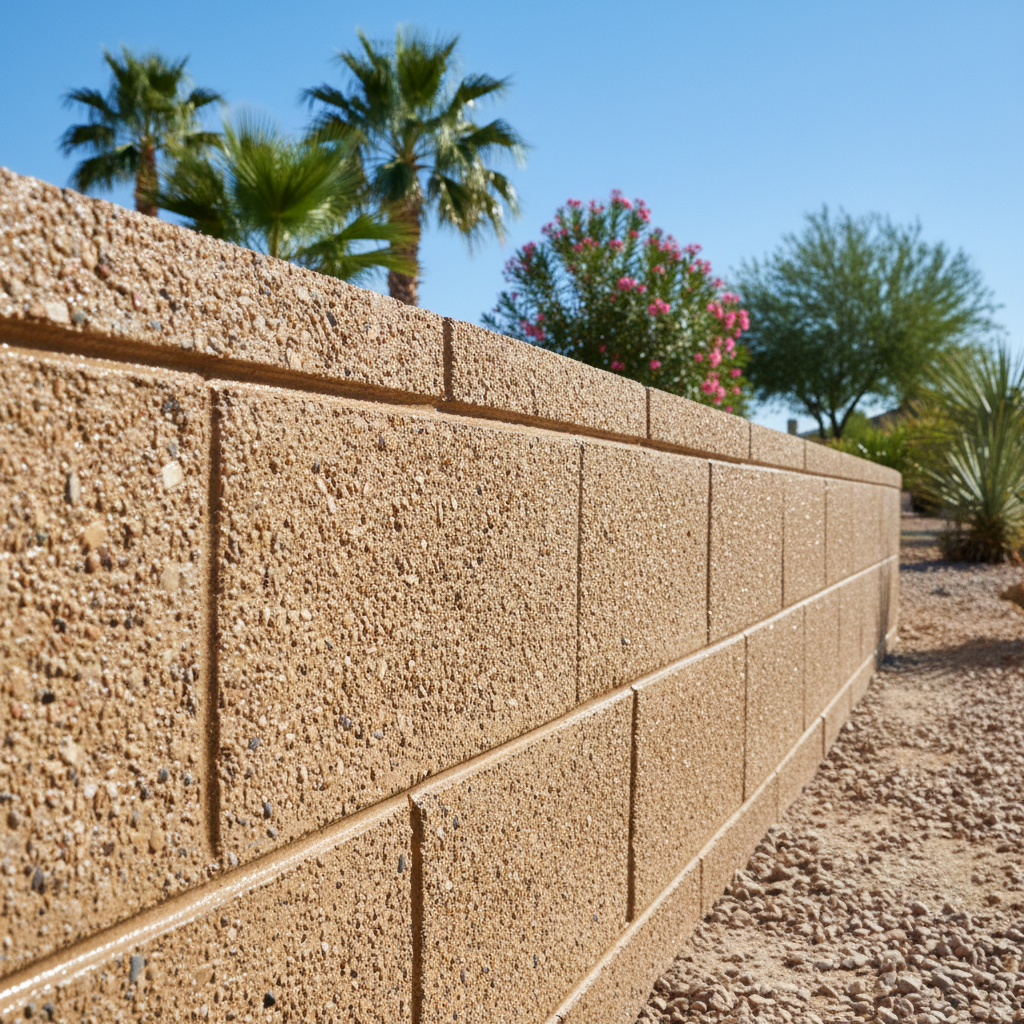
Alright, let's talk about retaining walls. Here in Laveen, with all our sloped lots and the need to manage drainage, these things are more than just a pretty face. They're functional, they're critical, and if they're not done right, they can be a real headache. I get a lot of the same questions from homeowners, so I figured I'd put it all down in one place. No fluff, just the facts from someone who's been building these things for years.
What exactly is a retaining wall, and why would I need one?
Simply put, a retaining wall is a structure designed to hold back soil. Think of it as a vertical barrier that prevents soil from eroding or slumping down a slope. You'd need one for a few main reasons. Maybe you've got a sloped yard and you want to create a flat, usable space for a patio or garden. Or maybe you're dealing with serious erosion issues, especially during our monsoon season when the water just cuts through everything. Sometimes it's about managing drainage, directing water away from your foundation. And sometimes, honestly, it's just about aesthetics – creating different levels in your landscape can look fantastic and add curb appeal.
What types of concrete retaining walls are there?
When we talk about concrete, there are usually two main types I'm dealing with. First, you've got your segmental retaining walls (SRW). These are made from individual, interlocking concrete blocks. They're popular because they're versatile, come in different colors and textures, and can be built without mortar, relying on their weight and interlocks. They're great for residential landscaping, often up to about four feet high without needing an engineer. Then you have poured concrete walls. These are usually reinforced with rebar and poured on-site. They're incredibly strong and durable, perfect for taller walls, heavier loads, or when you need a perfectly smooth finish. They often require more complex formwork and engineering, but they're built to last a lifetime.
Do I need a permit for a retaining wall in Laveen?
Most likely, yes. This is a big one, and it's where a lot of folks try to cut corners, which always leads to trouble. In Phoenix, including Laveen, if your retaining wall is over 3 feet in height (measured from the bottom of the footing to the top of the wall), you're going to need a building permit. Even if it's under 3 feet, if it's supporting a significant load, or if it's part of a larger structural project, you might still need one. It's not just about the city wanting to be nosy; it's about making sure the wall is designed and built safely, especially with our expansive clay soils here that can put a lot of pressure on structures. Always check with the City of Phoenix Planning & Development Department or, better yet, let your contractor handle the permit process.
How long do concrete retaining walls last in our Arizona climate?
A well-built concrete retaining wall, especially one that's properly engineered and installed, should last for decades. We're talking 50 to 100 years, easily. The key here in Arizona is proper drainage and foundation prep. Our intense heat and the occasional heavy rains can be tough on anything. If water gets trapped behind the wall and freezes (which, let's be real, isn't a huge problem here, but still), or if the soil behind it isn't draining correctly, the hydrostatic pressure can cause it to crack or lean. That's why weep holes, gravel backfill, and sometimes even a geogrid are crucial. Kingdom Concrete Laveen makes sure these details are never overlooked.
What's the deal with drainage behind the wall? Is it really that important?
Absolutely, it's critical. Probably the most important factor for a retaining wall's longevity. Imagine a heavy rainstorm – and we get some doozies here. All that water seeps into the soil behind your wall. If it can't escape, it builds up pressure, called hydrostatic pressure. This pressure can be immense, pushing against the wall and eventually causing it to bow, crack, or even fail. To prevent this, we typically install a layer of gravel directly behind the wall, sometimes with a perforated drain pipe (a French drain) at the bottom, which directs water away. Weep holes are also often incorporated into the wall itself to allow trapped water to escape. Don't let any contractor tell you drainage isn't a big deal; they're wrong.
What causes retaining walls to fail, and how can I prevent it?
Most failures come down to a few things: poor design, improper installation, or bad drainage. As I just mentioned, hydrostatic pressure from trapped water is a huge culprit. Another common issue is an inadequate foundation – if the footing isn't deep enough or wide enough for the soil conditions and the wall's height, it can settle unevenly or tip. Using the wrong materials or not reinforcing the wall properly (like not enough rebar in a poured wall) can also lead to structural weakness. To prevent failure, you need a professional who understands soil mechanics, local building codes, and proper construction techniques. Don't skimp on engineering for taller or critical walls. It's an investment in safety and durability.
How much does a concrete retaining wall cost?
This is the question everyone asks, and it's also the hardest to give a straight answer to without seeing the job. The cost depends on a lot of factors: the type of wall (segmental block vs. poured concrete), the height and length, the accessibility of the site, the amount of excavation needed, the type of soil, and whether engineering and permits are required. Generally, you're looking at anywhere from $30 to $100+ per square foot of wall face, sometimes more for complex jobs. Poured concrete is usually on the higher end due to labor and materials. My best advice is to get a detailed quote from a reputable contractor who comes out to your Laveen property, assesses the site, and gives you a breakdown of all the costs involved. Don't just go for the cheapest bid; you often get what you pay for when it comes to something as structural as a retaining wall.
Building a retaining wall isn't a DIY weekend project, especially not one that's going to stand up to our Arizona elements. It's an investment in your property's stability and appearance. If you've got a slope that's giving you grief, or you're looking to redefine your yard, give us a call. We're here to help you get it done right.