What's the difference between concrete stain, paint, and epoxy?
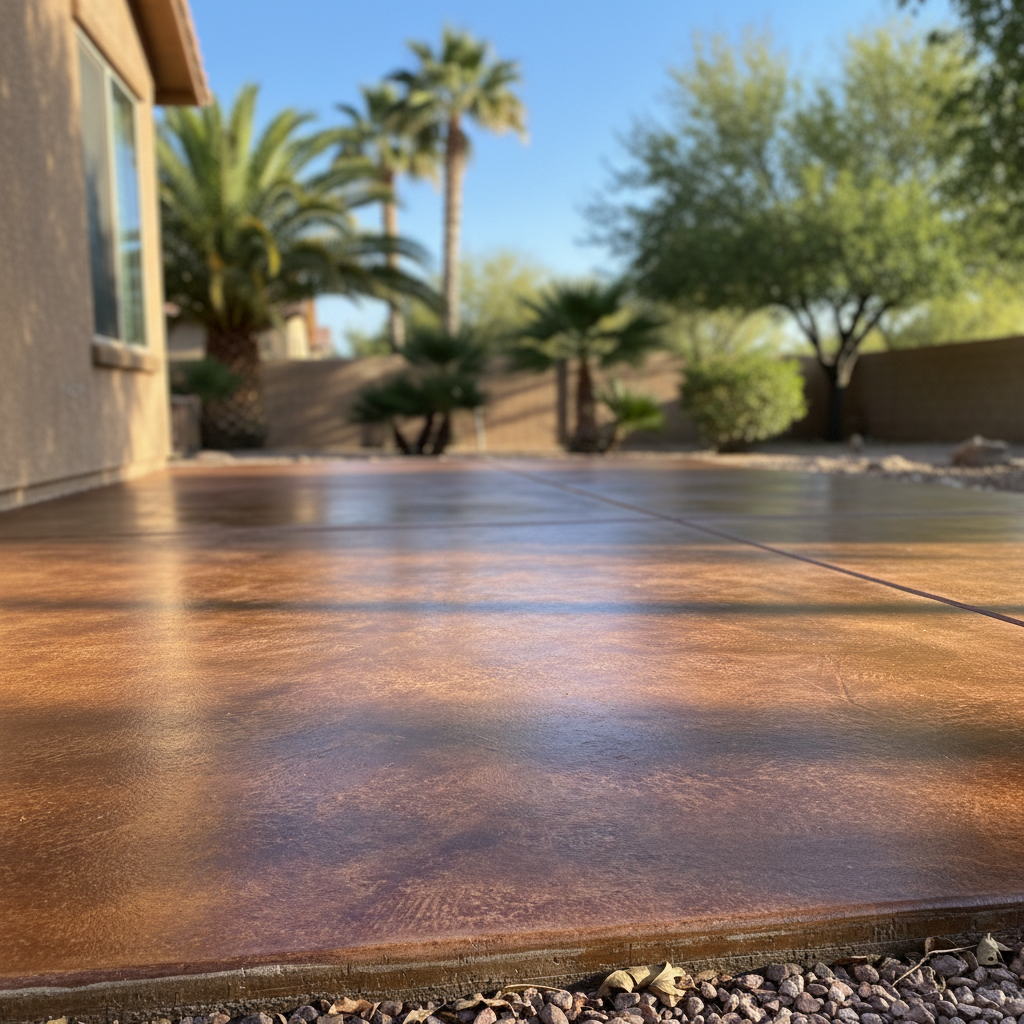
This is probably the most common question I get, honestly. Look, they all change your concrete's color, but they do it in completely different ways. And that means different results, different looks, and definitely different lifespans. Concrete stain, whether it's acid-based or water-based, isn't a coating at all. It actually soaks into the concrete surface, reacting with the lime inside (for acid stains) or just soaking into the pores (for water-based ones). This gives you a translucent, varied look, kind of like natural stone. It won't chip or peel because it becomes part of the concrete itself, not just sitting on top.
Paint, on the other hand, is definitely a coating. It sits right on the surface. While it gives you a nice uniform color, it's pretty prone to chipping, peeling, and fading, especially with our intense Laveen sun and those wild temperature swings. You'll likely be repainting it more often than you'd prefer. Epoxy is also a coating, but it's much tougher and thicker. It creates a really durable, often glossy, non-porous surface. This stuff is great for garages or industrial spaces where you need serious protection against chemicals and heavy traffic. It's not usually what folks want for a natural-looking patio, though, and it can get pretty slippery when wet if you don't add some anti-slip stuff.
Can I stain existing concrete, or does it have to be new?
Absolutely, you can stain existing concrete! In fact, most of the staining projects I do for people around here are on existing patios, driveways, or pool decks. The big thing is the condition of that existing concrete. It needs to be clean, dry, and totally free of any old sealers, paints, glues, or grease. If there are existing coatings, they need to be completely stripped off, and that can be a real job. Cracks and major imperfections? Staining won't hide those; actually, it might even make them stand out more. We always inspect the slab first to make sure it's a good candidate. If it's too damaged or heavily patched, the stain won't take evenly, and you'll just end up disappointed.
How long does concrete staining last in our Arizona climate?
That's a fair question, especially with the brutal summers we get here in Laveen. A properly stained and sealed concrete surface can last a good long time — usually 5 to 10 years, sometimes even longer, before it needs a refresh. The biggest factors affecting how long it lasts are the quality of the sealer we use, how much direct sun it gets, and how much foot or vehicle traffic it sees. The sun here is relentless, so using a high-quality, UV-resistant sealer is non-negotiable, period. Regular cleaning and reapplying a clear sealer every 2-3 years will really extend its life. Think of it like waxing your car – it protects the finish.
What kind of maintenance does stained concrete require?
Good news here: stained concrete is pretty low maintenance, especially compared to some other surfaces. Mostly, it just needs regular cleaning. Sweep it off to remove loose dirt and debris. For a deeper clean, a hose and a mild, pH-neutral cleaner (like dish soap and water) with a soft-bristle brush usually do the trick. Avoid harsh chemicals, bleach, or acidic cleaners; these can damage the sealer and even etch the stain over time. Pressure washing is okay, but use a wide fan tip and keep the pressure moderate; don't blast it too hard or too close, especially on older concrete. Like I said, re-sealing every couple of years is also part of good maintenance to keep it protected and looking fresh.
Will staining hide cracks or imperfections in my concrete?
No, it won't. This is a common misconception, and it's really important to be clear about it. Stains are translucent. They don't create an opaque layer like paint would. Think of it more like putting a colored filter over a photograph. Any existing cracks, spalling, patches, or variations in the concrete's texture will still be visible, and often, the stain will even accentuate them. If you're hoping to hide flaws, staining isn't the right solution for you. You'd need to repair the concrete first, and even then, patches might take the stain differently, leading to an inconsistent look. We'll always point out these issues before we start a job, so you know exactly what to expect.
Is stained concrete slippery, especially around pools?
It can be, yes, especially if it's sealed with a high-gloss sealer. That's why we always talk about anti-slip options, particularly for areas like pool decks or walkways that get wet. We can mix additives into the sealer – usually fine grit or sand-like particles – that create a textured surface and significantly increase traction. You won't really see them, but you'll definitely feel the difference. It's a small step that makes a big difference for safety, and it's something Kingdom Concrete Laveen always recommends for outdoor applications, especially with our monsoon rains making surfaces slick.
What colors and finishes are available for concrete staining?
You've got a lot of options, probably more than most people realize! For acid stains, the palette is generally earth tones – browns, tans, terra cottas, and some greens or blues. The color comes from a chemical reaction, so it's not like picking a paint chip; the final shade really depends on the concrete's unique makeup. Water-based stains offer a much wider color range, including brighter colors, and they give you more control over the intensity. Both types can achieve a mottled, natural, or even marbleized look. As for finishes, that comes down to the sealer. You can go from a matte, natural look to a high-gloss, wet look. We'll show you samples and discuss what works best for your specific area and aesthetic.
How much does concrete staining cost compared to other options?
The cost of concrete staining can vary quite a bit based on the size of the area, the condition of the existing concrete (prep work is a big factor here), the type of stain, and how complex the design is. Generally, it's a very cost-effective way to upgrade your concrete compared to installing new pavers, tile, or even pouring new decorative concrete. It's usually less expensive than epoxy coatings for large outdoor areas too. You're looking at a range, but it's definitely on the more affordable end of decorative concrete options while still giving you a high-end, custom look. We always provide a detailed, no-surprise quote after seeing the site.